
Caregiver's Corner (Blog) is your no-fluff guide to the messy, sacred, everyday work of caring for someone else. Each post covers practical tips, product picks, and real-world advice for at-home caregivers—especially the ones who never got any training. Backed by The Unmedical Manual, these are affiliate-supported resources designed to make hard days a little easier, one smart tool at a time.
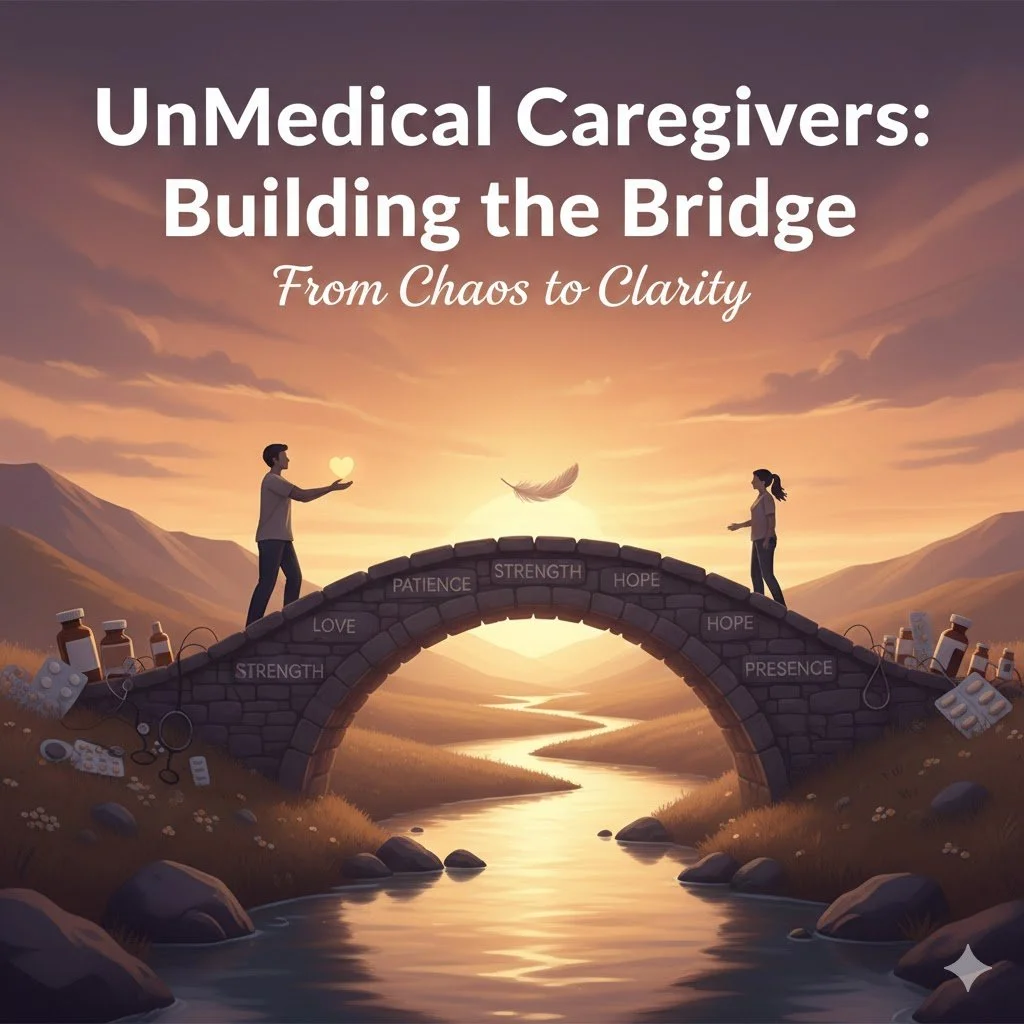
There’s a Kind of Caregiver Most People Don’t See
There’s a kind of caregiver most people never see. Untrained, unpaid, and quietly carrying hospital-grade care at home. This heartfelt piece shares the wisdom caregivers often realize only after their loved one has passed, and what they want those still in it to know.
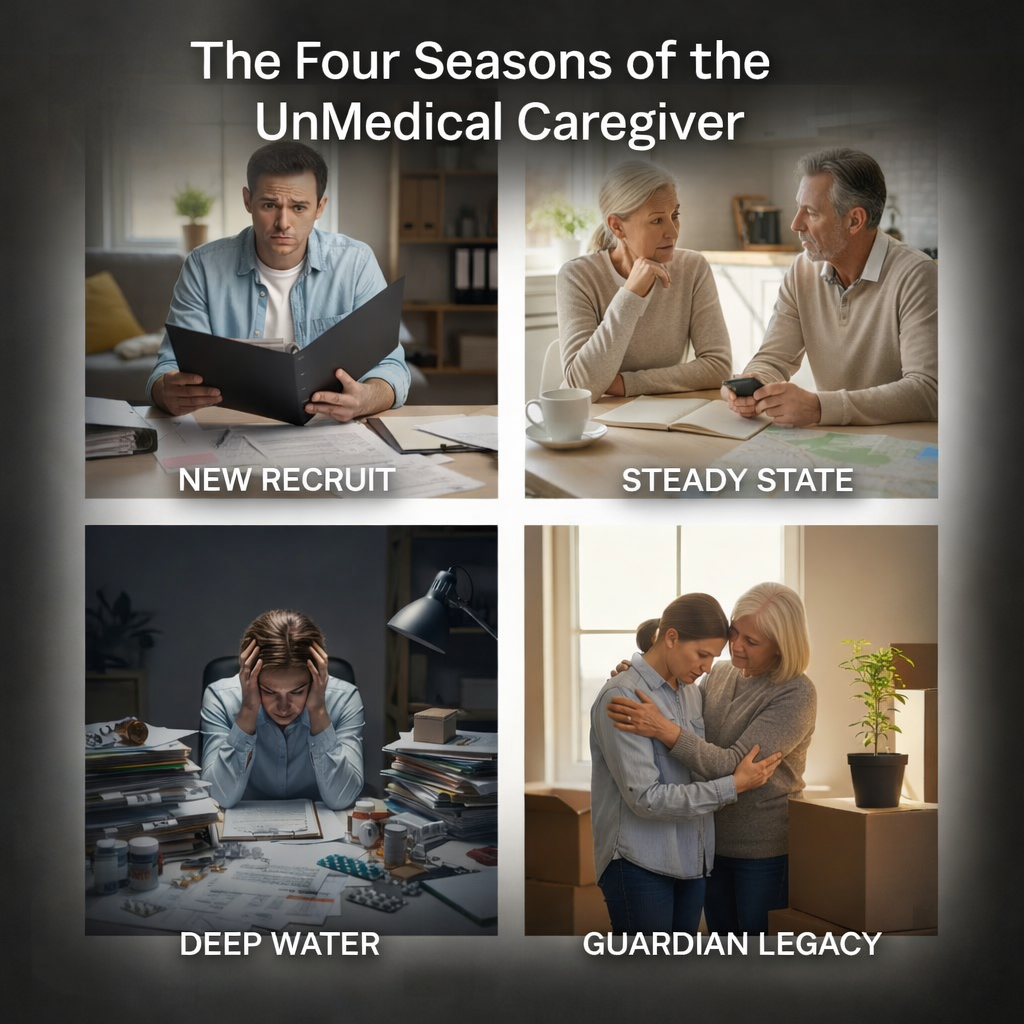
The Four Seasons of the UnMedical Revolution
Most caregiving advice assumes a system is coming to save you. It isn't. Whether you are a "New Recruit" or a "Guardian," discover the four stages of the UnMedical journey and the tactical tools—like the 20-Year Conversation—needed to survive the gap between the hospital and the home.
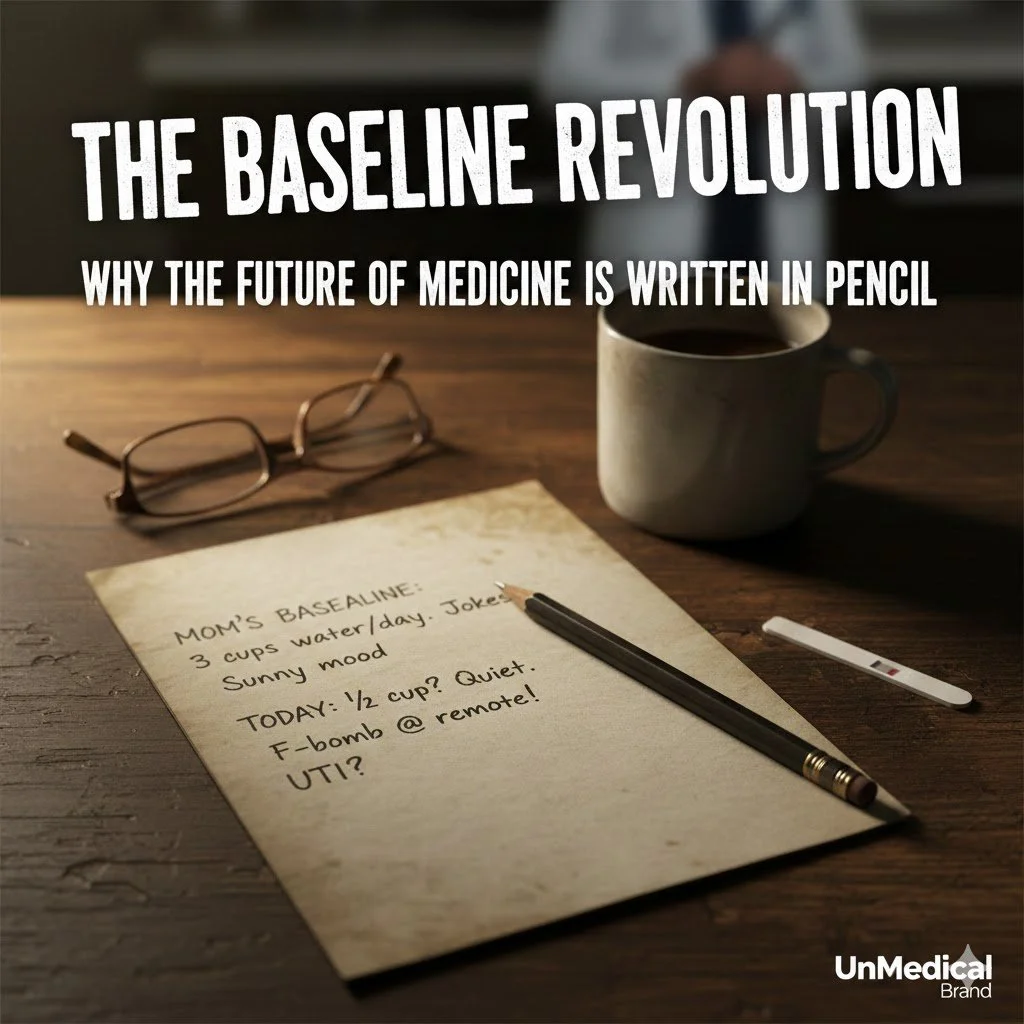
The Baseline Revolution: Why the Future of Medicine is Written in Pencil
When the medical system speaks in 40-page legal packets, the home caregiver is the one who translates. Discover why the humble pencil and a "Human Baseline" are more powerful than a million-dollar MRI. It's time to bridge the billion-dollar gap between the hospital and the home.
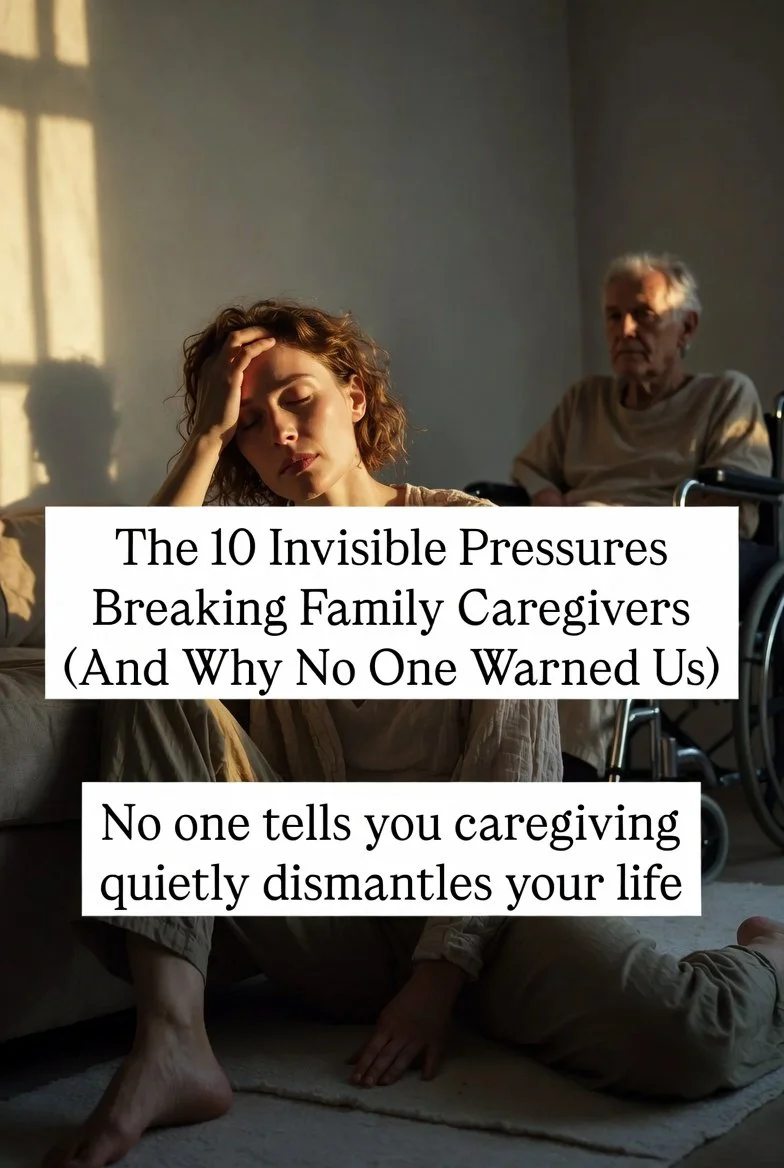
The 10 Invisible Pressures Breaking Family Caregivers (And Why No One Warned Us)
No one warns family caregivers about the silent toll: constant emotional vigilance, hidden financial drains, social isolation, and self-erasure that lead to burnout. Discover the 10 invisible pressures quietly breaking caregivers—and why it's not your fault. Tools like The UnMedical Brain help offload the load so you can breathe.
“What Do I Do When I Have No One to Help Me?”
When someone asked, “What do I do when I’m overwhelmed and I have no one to help me?” the room went quiet.
Because sometimes, the truth is harder than advice: the help doesn’t exist — and the system was never built for families doing medical-level care alone. This piece names that reality, and what actually helps when there’s no backup coming.
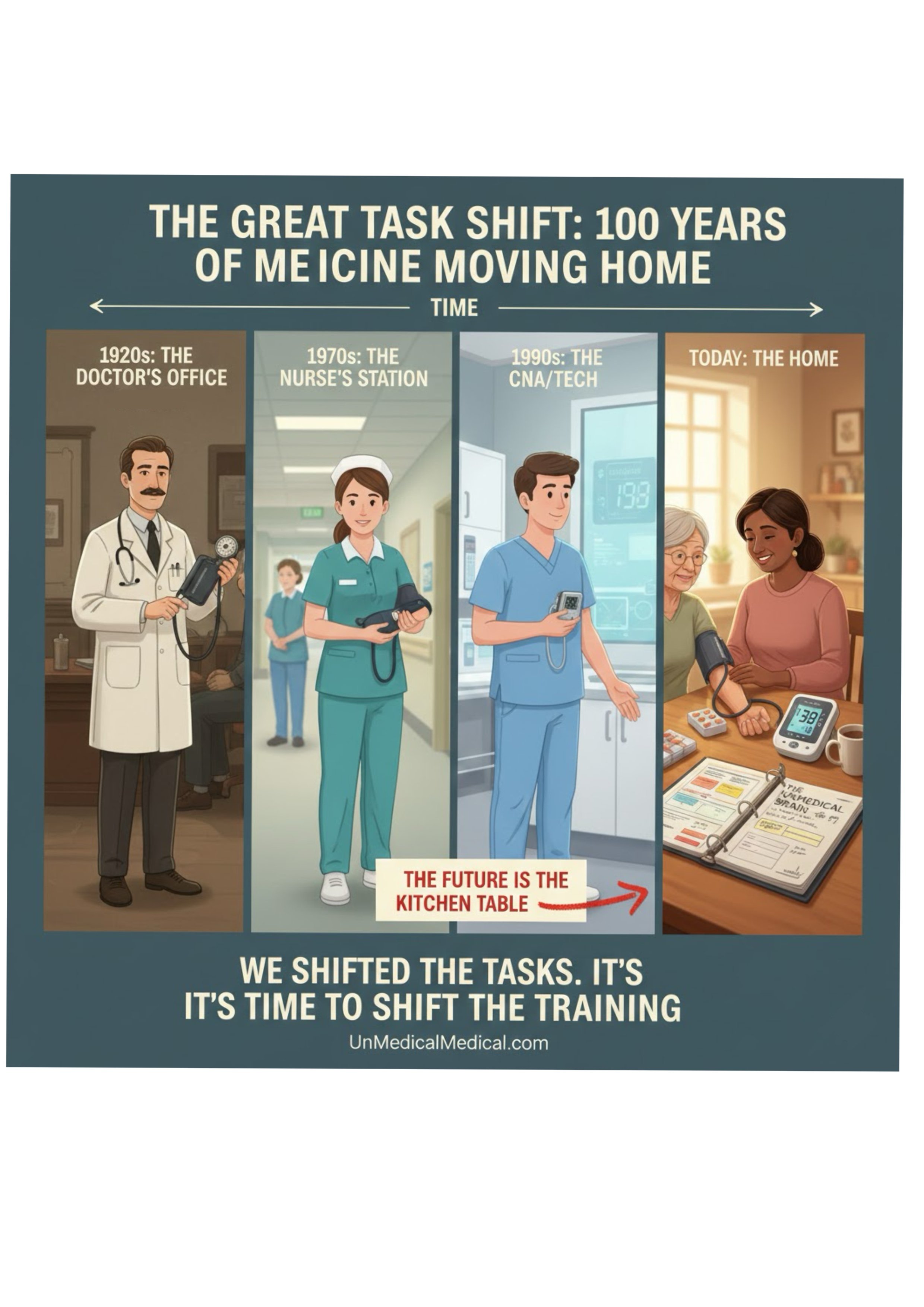
Why the Hospital Story Ends at Discharge — and the Only Solution Is Empowering the Family Caregiver
Medicine has spent a century moving clinical tasks from the doctor's office to your kitchen table. We shifted the work, but we forgot to shift the training. With a massive nursing shortage and a "Gray Tsunami" of aging patients, the home is now the primary clinical site in America. It’s time to stop winging it and start operating with a Home SOP.
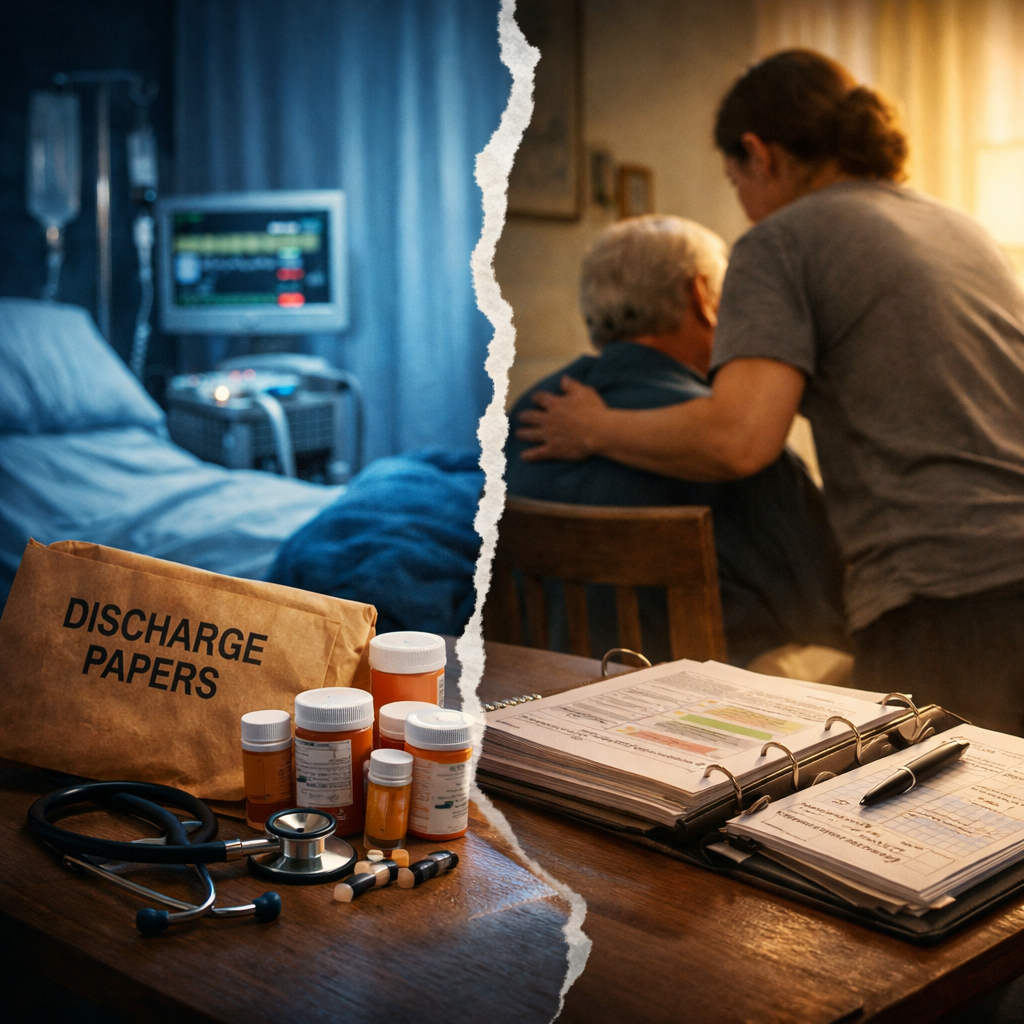
The Missing SOP: Why the Hospital Story Ends Where the Family Story Begins
In the Army, we had an SOP for everything because execution saves lives. In hospitals, it's the same. But the moment a patient is discharged, families are handed a stack of papers and told "Good Luck." It’s time to stop improvising and start using a system. Meet the "Home SOP"—the missing layer between clinical intent and real-life survival.
When Caregiving Feels Like Doing It All Alone: How to Survive Burnout and Build Support
Feeling overwhelmed as a solo caregiver? Learn practical strategies to survive burnout, organize care, and protect your well-being while caring for a loved one at home. Tips, tools, and insights for family caregivers with no help.
10 Things Every New Caregiver Needs to Know on Day 1
Start your caregiving journey with confidence! Learn the 10 essential tips every new family caregiver should know on day one — from building a support team and care binder to managing stress, grief, and burnout. Simple, practical strategies for untrained caregivers to thrive at home.
Navigating the Hidden Struggles of Unpaid Family Caregiving
Unpaid family caregivers are often thrown into complex medical, emotional, and logistical roles without training or support. This article breaks down the hidden struggles caregivers face—from disorganization and burnout to family conflict—and offers practical, real-world strategies to make caregiving more sustainable.
The Cost of the Next Move: Surviving Decision Fatigue
Caregiving doesn’t just exhaust your body — it overloads your brain. When every hour brings another safety decision, unpaid family caregivers hit decision fatigue fast. This piece names the quiet weight that breaks caregivers and shows how to stop carrying it all in your head.
Sex, Rx, and the 20-Year Conversation:
Most caregivers are forced to make the hardest choices of their lives in the least supported moments. We’re pulling back the curtain on the taboo topics—sex, death, and the "20-Year Conversation"—to give you a framework that respects their wishes and protects your sanity. No scrubs required.
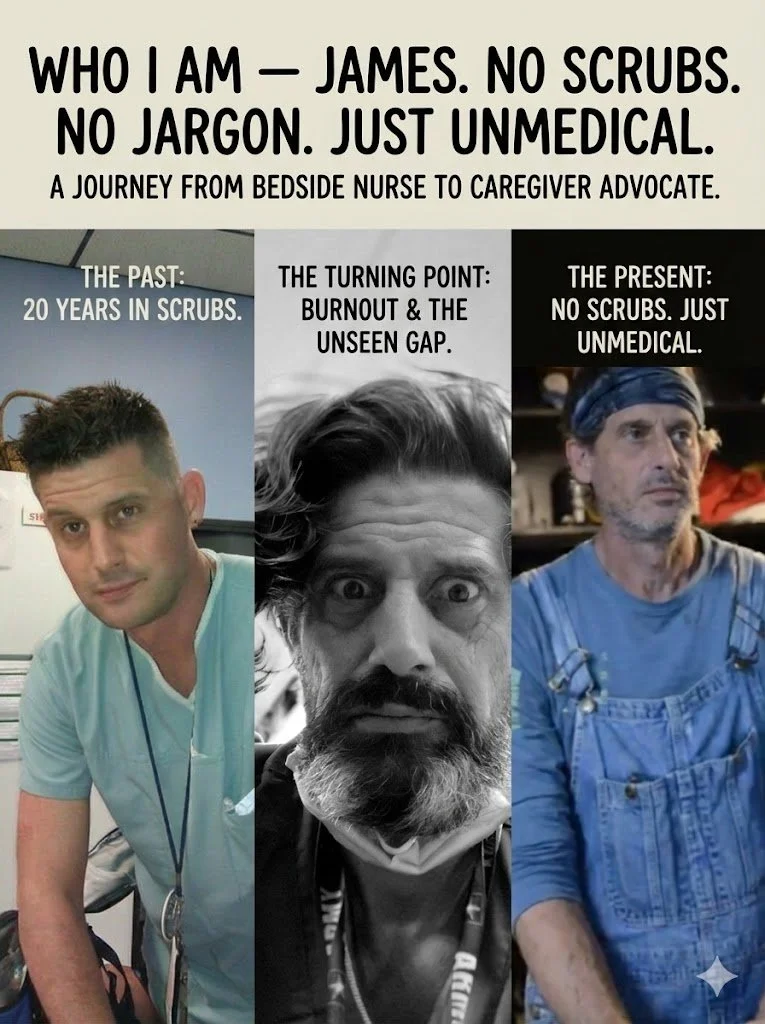
Who I Am — James. No Scrubs. No Jargon. Just UnMedical.
For twenty years, I wore the scrubs—from the Harley-riding home health visits to being named VA Preceptor of the Year. I’ve seen where the medical system excels and where the safety net disappears for families. Now, I’m retiring the uniform to build a bridge for the "UnMedical Caregiver." This is my story, the mission of UnMedical, and why the clinical "calling" was just the beginning.

The Most Expensive Gap in Healthcare Is After Discharge — And It’s Getting Bigger
Hospitals lose millions to preventable readmissions; caregivers lose their sanity to clinical jargon. I spent 20 years in scrubs to realize the "discharge packet" is broken. Discover the UnMedical System: the bridge between the hospital doors and the kitchen table that reduces risk, saves money, and stops the caregiver "brain fog." No scrubs required—just common sense.
How to Become an UnMedical Caregiver
Discover how to become an UnMedical Caregiver with practical tips for family home care. Overcome common challenges like medication management, emotional burnout, and organization using real-world strategies from "The UnMedical Caregiver's Survival Guide" and the "UnMedical Brain" binder system. Improve communication, reduce stress, and enhance quality of life for caregivers and loved ones in elderly care at home.

Progressive Chronic Disease Is a Moving Target — Stop Letting It Ambush You
Progressive chronic disease doesn’t “stabilize”—it keeps changing the rules. This piece explains the long-game reality of caregiving and how to build simple systems that flex when your person’s needs shift, so you’re not living in constant surprise.
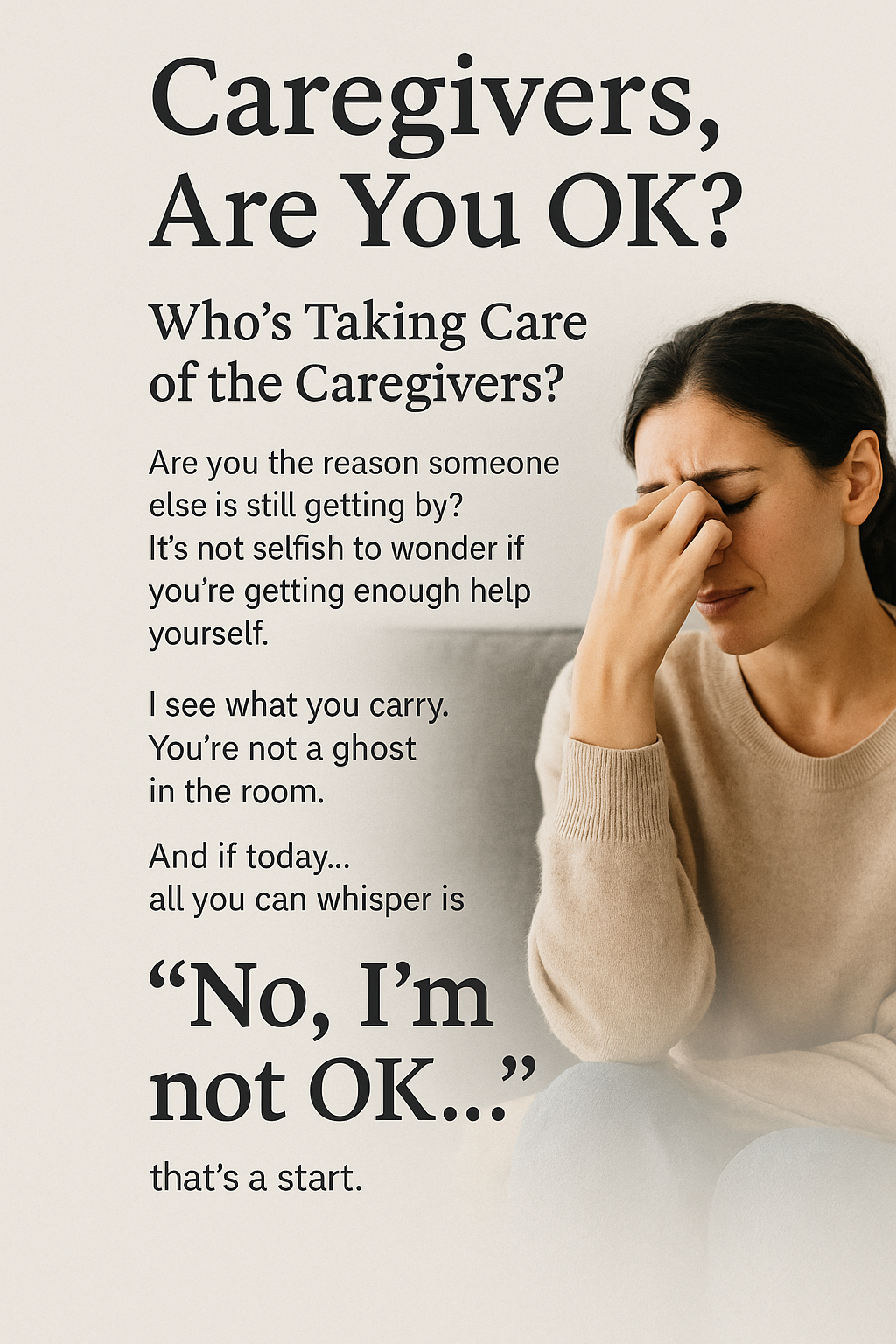
Caregivers, Are You OK?
“You’re the backbone behind someone’s care — but who’s taking care of you? A raw, honest letter to caregivers who often go unseen. Because your health, your pain, and your needs matter too.”
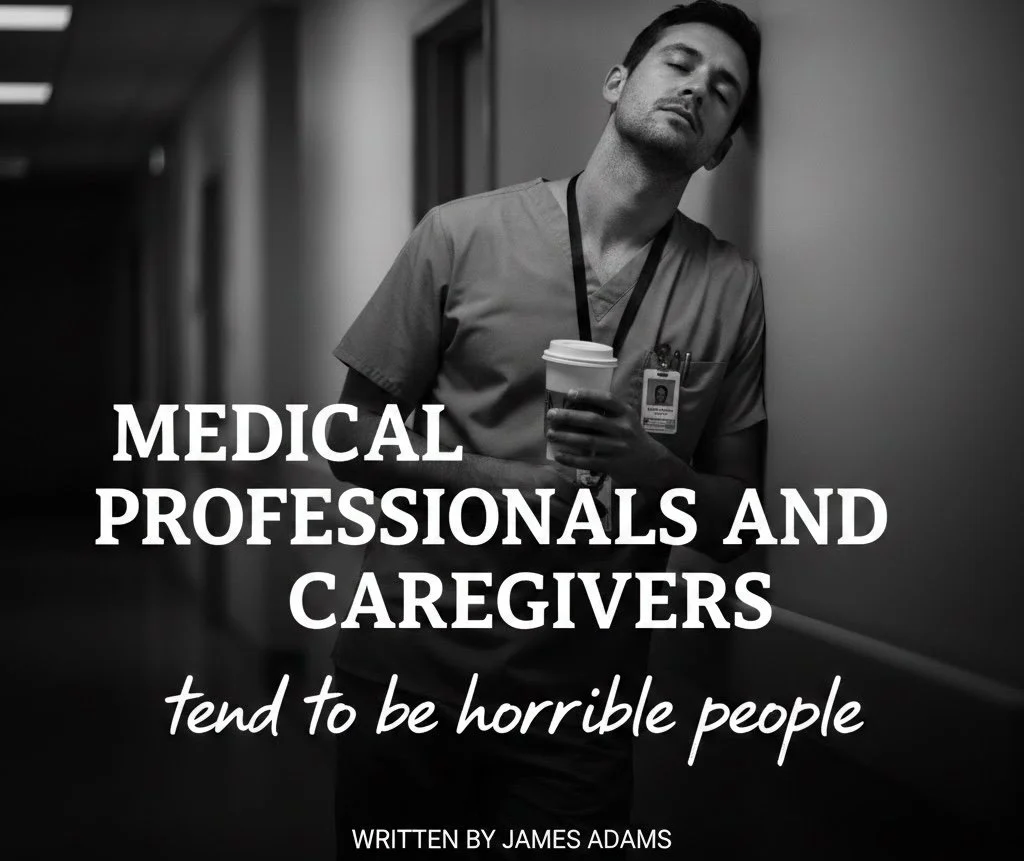
Medical Professionals and caregivers tend to be horrible people
We’re not “horrible people” because we treat others badly—most of us show up harder than anyone. We’re horrible because we treat ourselves like trash in the name of care. This piece is for every medical professional and caregiver who’s running on empty, nodding along, and finally realizing they deserve better too.
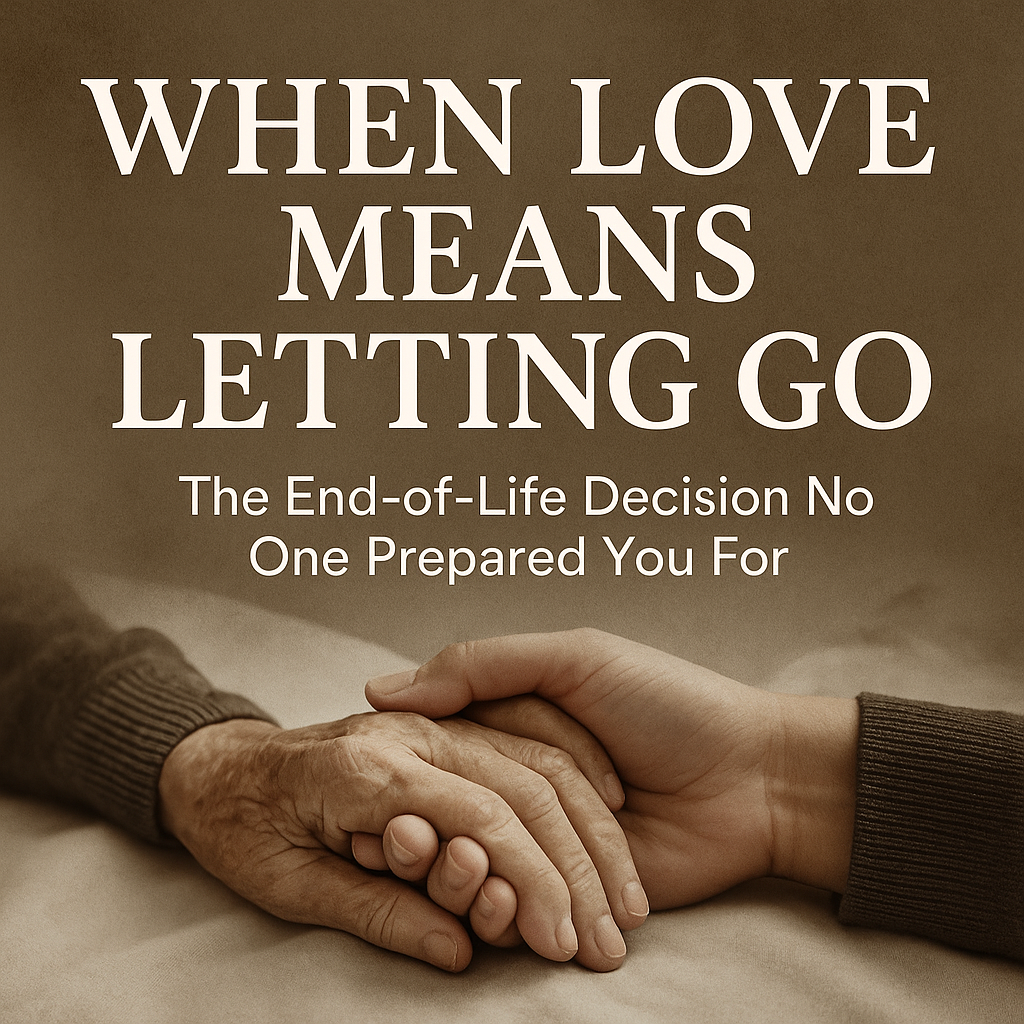
When Love Means Letting Go: The End-of-Life Decision No One Prepared You For
When love means letting go, caregivers face choices no one prepared them for. This piece is a blunt, compassionate guide for the moment you’re stuck between “keep going” and “let go,” with real stories, plain-language tools, and the questions that actually help families find clarity at the end of life.
The Financial Ambush of Family Caregiving: How to Protect Your Wallet When You Didn’t Plan for Any of This
Family caregiving doesn’t just steal your time — it quietly drains your paycheck, credit score, and retirement. Learn how to stop the financial bleed, protect your essentials, and find real money help when caregiving hits out of nowhere. This isn’t a “skip the latte” post. It’s financial triage for real-life caregivers.