When Love Means Letting Go: The End-of-Life Decision No One Prepared You For
Unmedical exists to be the bridge between highly trained medical professionals and everyday family caregivers. Our mission is simple: make caregiving clear, practical, and human so you can care with confidence without burning out.
This isn’t for people who want sugarcoated advice or inspirational posters about “fighting.”
This is for you if you’re lying awake at 3 a.m., staring at the ceiling, thinking:
“If we stop… am I killing them? If we keep going… am I torturing them?”
I’m going to be straight with you:
I can’t tell you what to choose. I can’t promise you won’t ever have doubts.
What I can do is give you stories, questions, and language you can use in the real rooms where these decisions actually get made — hospital hallways, nursing home patios, kitchen tables at midnight.
The Question You’re Afraid to Say Out Loud
Most caregivers never say it out loud. They just feel it chewing a hole in their chest.
You’re watching your person fade.
The doctors are offering “options” that sound more and more like science fiction: more dialysis, another round of chemo, another tube, another machine. The paperwork lands in front of you and suddenly everyone turns and looks at you like you’re the grown-up here.
Inside, it sounds like:
“If I sign for another treatment, am I helping… or just stretching out the suffering?”
“If I say ‘no more,’ will everyone think I killed them?”
No one prepared you for this part of love.
Nobody said, “By the way, someday loving them might mean saying, ‘It’s okay to let go.’”
How We Got Here: Bodies Can Be Kept Going. People Are Different.
Modern medicine is incredible at keeping bodies alive:
We can breathe for someone with machines.
We can clean their blood when kidneys give out.
We can feed through tubes when mouths can’t swallow.
We can shock, press, squeeze, and medicate a failing body into “one more day.”
But here’s the part almost no one explains clearly:
Just because we can keep a body going doesn’t mean the person you love is still living a life they would have chosen.
You don’t usually land in that place with one big “Yes.”
You slide there, inch by inch:
“Let’s try this and see how she does overnight.”
“We’ll do one more treatment and reassess.”
“We still have options.”
Nobody circles back to ask, in plain language:
“Given how things really look now, is this still what they would want? Or are we in a different phase of the story?”
That’s the gap you’re stuck in:
Between “fight it” and “protect them.”
Between “do everything” and “do what’s kind.”
The Son on the Patio: Prolonging Life or Prolonging Suffering?
I want to share a story, with all the respect in the world.
Years ago, during a break outside a nursing home, a son came out to sit beside me. You could see the weight on him before he said a word. His mother was inside, confused and less alert than she used to be. Her doctor had told him:
“If we start dialysis, she’ll probably perk up and seem more like herself.”
But there was a catch. It would be temporary. She would need dialysis more often over time. Each round meant more time at the clinic, more stress on a frail body, more pokes and needles and hours in a chair she hated.
He looked at me and said, basically:
“I don’t know if I’m supposed to prolong her life or let her go. I don’t know what the right thing is.”
There wasn’t a magic answer. No perfect right or wrong.
The only thing I could offer was a question:
“If you could ask your mom twenty years ago, when she was clearer and stronger, what do you think she would have told you to do now?”
Not what he could live with.
Not what would make the hospital feel better.
Not what extended the calendar the longest.
What she would have said about this version of herself — confused, frail, depending on machines more and more.
He thanked me and went back in. A few weeks later, she died. A month after that, he came back to thank the staff. He stopped me and said he believed he’d made the right choice — not because it was painless, but because when he pictured his mother twenty years earlier, he knew she would have never wanted her life stretched out in the condition she was in.
He still grieved. He still hurt. But he wasn’t drowning in “I murdered her.”
He could say, “I did my best to honor who she was.”
That’s the heart of it:
You cannot make a wrong decision if you honestly aim at what they would have wanted and act from love, not fear.
You’re human. You only get the information you have. You do the best you can inside a broken system with a breaking heart.
Giving Permission to Go: Why Some People Hang On
There’s another side to when love means letting go: sometimes people are holding on because they’re worried about you.
The first time I watched someone take their last breath, I was 14, at my grandfather’s bedside in a VA hospital.
Earlier that day, he was still talking with us. Later, in his sleep, his breathing changed: slower, deeper, like his body was already halfway out the door. My grandmother, my mom, and my aunt stood at his side and did something simple but powerful: they told him they loved him, and they gave him permission to let go.
Not because they wanted him gone.
Because they loved him enough to stop asking him to keep fighting for their sake.
He took two deep breaths. Then he was gone.
The medical team rushed in, ready to “do something,” and his daughters stopped them at the door:
“No. He’s not in pain anymore. Let him be.”
Years later, I sat with another man at the end of his life. Our friendship was built on inappropriate jokes and gallows humor. So that’s how I showed up — telling him the kind of dirty jokes he loved, thanking him for his friendship, and telling him, very plainly, that it was okay to go.
That he had done enough. That we would be okay.
That he didn’t have to keep hurting for us to prove that he loved us.
Sometimes, that’s the thing holding a person here:
They’re afraid of leaving you alone.
They’re worried about what will happen to you.
They think your tears mean “don’t go,” when what you really mean is “I love you.”
You don’t have to do a perfect speech. You don’t need fancy words.
Permission can sound as simple as:
“I love you. I don’t want you to suffer. You can rest now. We’ll take care of things here.”
That’s when love means letting go in the realest way.
Where Do You Even Start When Their Wishes Aren’t Clear?
Of course, all of this is easier when your person left clear instructions. Most don’t.
They didn’t finish their advance directive. They never named a medical power of attorney.
They said, “Oh, you’ll know what to do,” and then life happened and now here you are with a pen in your hand and no map.So you do the next best thing. Instead of asking, “What can medicine do?” ask:
“Who were they, really, before all this? What did they say about quality of life, hospitals, being hooked to machines, watching others suffer?”
Think about:
How they talked about older relatives who went through “everything.”
Whether they were more “fight to the last breath” or “when it’s my time, don’t drag it out.”
What they loved about their life — independence, home, privacy, clear mind, being able to joke, faith practices, seeing grandkids, being outside.
Then you use that to guide you: “Knowing who they were, would they want more time like this? Or would they want us to focus on comfort and dignity now?” You’re not playing God. You’re doing your best imitation of who they were at their clearest.
Talking to Doctors Without Getting Flattened
Doctors and nurses are not villains in this story. They are working inside a system that rewards “doing more” and doesn’t give them much time to sit at your kitchen table and sort through your heart.
So you arm yourself with a few simple, strong questions.
You can say:
“I need you to be really direct with me. What are we realistically hoping this treatment will do?”
“Best case, worst case, and most likely — if we keep going like this, what does that actually look like for my person?”
“If we stopped these aggressive treatments and focused on comfort, what would day-to-day look like?”
“If this were your parent or your partner, what would you do?”
If their answer comes out in a fog of jargon and percentages, you’re allowed to say:
“I’m not following. Can you explain it like you would to your own family, at the kitchen table?”
You’re not being difficult. You’re doing quality control on the most important decisions you’ll ever make.
And if the word “hospice” or “palliative care” scares you, say that too:
“I’m scared that choosing hospice means everyone stops caring about us. Can you walk me through what actually changes, and what doesn’t if we make that call?”
The clearer your questions, the better they can help. You’re not asking them for miracles. You’re asking them for honesty.
Advance Directives, in Caveman Language. If your person is still able to talk and think things through, this is the time to grab the moment, even if it feels awkward.
In plain terms:
An advance directive or living will is basically:
“Here’s what I do and don’t want if I can’t speak for myself.”A medical power of attorney / health care proxy is:
“Here’s who I trust to speak for me.”
You don’t have to be a lawyer to start the conversation. You can begin with: “While you’re still able to decide, can we talk about what you’d want if things went really bad?”
“If your heart stopped, would you want them to crack your chest, shock you, put you on machines… or keep you calm and comfortable and let you go?”
“If the doctors said you likely had months, not years, would you want to stay home with help, or keep coming to the hospital?”
If you’ve already crossed that bridge and they can’t meaningfully answer anymore, don’t beat yourself up for “not doing this sooner.” Most families are in that boat. You still use the same idea from your best understanding of who they were and what they valued.
Guilt, Doubt, and the “What Ifs” That Keep You Up at Night
Let’s say the quiet part out loud:
You may be grieving them while you’re still caring for them, or secretly thinking, “I don’t know how much more of this either of us can take.” You may have moments where you wish it would just be over, and then hate yourself for thinking it. That doesn’t make you a monster. It makes you human. Your brain is trying to survive an impossible situation. You’re watching someone you love suffer. You’re tired in ways sleep doesn’t fix. Your body and nervous system are on red alert all the time.
You might tell yourself awful stories:
“If I say ‘stop,’ I killed them.
“If I say ‘go,’ I’m torturing them.
“If I were stronger, I wouldn’t feel this way.”
But here’s the truth that keeps showing up in story after story: You didn’t cause their illness. You can’t stop death.
Your real power is in how this last stretch goes: more chaos or more comfort, more fear or more honesty, more suffering or more gentleness. You will probably doubt yourself no matter what you choose. That’s not proof you did the wrong thing. That’s proof you cared.
A Simple Framework When You’re Stuck
When everything feels tangled, you can sit with these questions like a compass:
If they could see themselves right now, what would they say?
Are we buying time they can actually use — to talk, interact, enjoy — or just more days attached to machines and procedures?
Are we choosing this because it fits their values, or because we’re terrified to let them go and afraid of what people will think?
Have I asked the main doctor, in plain words: “Is this prolonging life or prolonging dying?”
If I look back five years from now, which choice will I regret less: pushing for more treatment, or shifting to comfort sooner?
There is no perfect, pain-free answer. There is only the kindest, most honest answer you can find with the information and strength you have right now. And that is enough.
🔧 Do this today (so future you doesn’t curse present you):
Pick one of those five questions and write your answer down on a note in your phone, in a notebook, on the back of an envelope.
Ask the main doctor one blunt question you’ve been scared to say out loud. It can be as simple as, “Are we prolonging life, or prolonging dying?”
If your person can still talk about it, ask them one gentle version of, “What would you want if things got worse?”
Next Steps: Tools That Make This Less Impossible
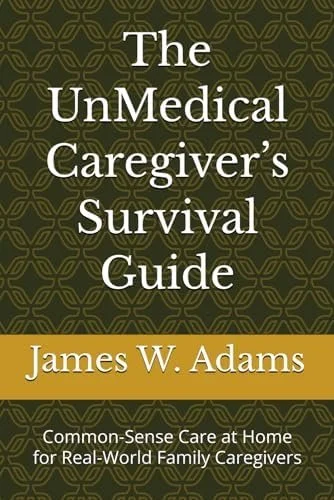
👉 Get The Book — The UnMedical Caregiver’s Survival Guide: Common-Sense Care at Home for Real-World Family Caregivers (on Amazon). Written for people like you who somehow became “the nurse at home” with zero formal training.
👉 Download The UnMedical Brain — instant PDF download ($9.99) The UnMedical Brain is the place you put it all so your actual brain can breathe. It turns a simple binder into your caregiving command center so you’re not guessing what to track. Print it, fill it in, and now you’ve got a grab-and-go home-care binder for when things go sideways: you grab this, and nobody’s guessing.
👉 Join the UnMedical Skills Lab community and build your caregiver toolkit —
Sign up for the Email List and receive a free UnM Field Guide.
The Field Guide is a small, punchy starter toolkit with core checklists and must-know street rules you can use today.
You’ll also get:
New articles and practical tools that don’t talk down to you
Real-world strategies that respect how tired you actually are
Updates when new guides, checklists, or tools drop
Preparation is a gift to future you. This field guide is one way to start.
JoinThe UnMedical Skills Lab — Free Facebook Community
Inside the UnMedical Skills Lab, you’ll find:
Other caregivers who actually get it
Practical tips and hacks you can steal and use the same day
Space to ask “dumb” questions (spoiler: they’re not dumb)
Support that doesn’t require you to sugarcoat how hard this is
You don’t have to do this alone. Really.Related Reading for When This Hits Too Close to Home
Support UnMedical’s Mission
If UnMedical has helped you feel less crazy, less alone, or more prepared:
👉 Help support UnMedical’s mission to educate caregivers.
Your support keeps the lights on so we can keep building tools and resources for people who never asked for this job but took it anyway.
I hope you, your family, and your person are happy, healthy, loved, and safe. And remember, if a clown like me can do it, you’ll be fine (if not better).
These Unmedical pieces pair well with what you’re going through right now:
The Grief No One Warns Caregivers About – For when you’re already grieving someone who is still technically “here.”
My Watch Is Over: Life After Caregiving Ends – For the quiet after, when everyone else moves on and you’re left with the what-ifs.
Don’t Make Things Harder (or Worse) Than They Already Are – On not piling extra suffering on top of what’s already unbearable.
Hospital Playbook (Caregiver Edition): The Unmedical Guide to Surviving the System – For making it through hospital stays without losing your mind.
Caregiver Burnout: What Actually Helps (And What Doesn’t) – Because “take a bubble bath” isn’t going to fix this.
Disclaimer: I am not writing this from the perspective of a medical professional. The information in this article is for general caregiver support and educational purposes only. It should not be taken as medical advice, diagnosis, or treatment. Always consult a qualified healthcare provider with questions about your loved one’s health or recovery.