We Can Do Better: A Conversation About Caregivers and Communication
One of my favorite patients I ever rehabbed was a physician. In my experiences over the years, doctors tend to be awesome patients. You want to know who some of the toughest patients have been in my experience? Nurses. Go figure.
That same doctor once told me something that stuck. He said the word “doctor” comes from Latin, meaning teacher. I went home and looked it up. It’s true. Doctor comes from docere — to teach.
That feels important, because if teaching is built into the title, then communication isn’t optional. It’s part of the job, and that brings me to caregivers.
Most caregivers didn’t plan on this. They didn’t grow up thinking, “One day I’ll be managing a catheter” or “I hope I get really good at tracking bowel movements.” They are spouses, daughters, sons, friends. They’re thrown into it.
And here’s something I’ve really come to understand: caregivers don’t read caregiving material for fun. If they have ten free minutes, it’s probably going toward a shower, a snack, or staring at a wall in silence.
So when we hand them a packet full of intimidating medical language, statistics, and carefully lawyer-approved explanations, we may feel thorough.
But thorough doesn’t always mean helpful.
There’s this idea that simplifying things is “dumbing it down.” I don’t buy that.
A strong reader can read simple material just fine. A struggling reader cannot read complex material and magically make sense of it. And even strong readers, when they’re stressed and exhausted, don’t process information the same way they do on a calm Tuesday afternoon.
Medical jargon is intimidating. It’s a great way to get someone to look at you blankly. Or worse, nod like they understand because no one wants to look dumb. People are far more likely to admit they’re terrified than admit they don’t understand. Teaching is not dumbing down. Teaching is making sure the other person can actually use what you said.
If I’m explaining how to care for a Foley catheter or a suprapubic tube, what does a new caregiver truly need to know? They need to know how to keep it clean so we don’t encourage a UTI. They need to know how to anchor it so we don’t cause trauma. They need to know what it looks like when it’s plugged. They need to know the signs of infection. And they need to know when to call and when to seek medical attention.
That’s it.
And if it’s done well, the person should be able to turn around and teach someone else. Meanwhile, somewhere out there, a beautifully formatted, triple-checked, committee-approved packet is still sitting half-read on a kitchen counter.
Statistics are great. Charts are great. But to an overwhelmed caregiver who never imagined they’d be managing a pee tube for someone they love, that can feel like overshooting the runway. We’re not trying to make someone’s grandson into a nurse.
We’re trying to help him keep his grandpa safe.
Another thing I think we miss is teaching caregivers how to communicate back to us.
There’s a huge difference between “He seems worse” and “His temperature has been 101.8 twice today, and he hasn’t emptied his bag since 10 a.m.” One is a feeling. One is information you can measure.
That shift alone can turn a rushed appointment into a productive one.
But no one sits them down and says, “Here’s how to give us information that helps.”
We assume they know how to talk medical.
Why would they?
And here’s something else I think we could improve. Encourage caregivers to write down their questions before the appointment. Actually say it out loud. “Write down your top three concerns.”
Because they go blank. The doctor walks in, everyone’s moving quickly, and suddenly that thing they were worried about all week disappears from their brain. By the time they remember, the conversation has moved on.
I don’t care how skilled a nurse or doctor is. They cannot answer a question that was never asked.
And on our side, we can do better too. We can slow down just enough to ask, “Can you tell me what you’ll do when you get home?” Not to test them. Not to embarrass them. But to make sure what we said actually landed, and will be able to be performed when they get back to the house.
I’m often a hypocrite. I will forever offer someone a “fluid extraction device” before saying straw.
But I do think all of us — doctors, nurses, therapists, caregivers — could raise the bar here.
Because better communication doesn’t require more time. It requires more intention.
Five clear minutes can accomplish more than forty-five scattered ones.
And if the word doctor truly means teacher, then maybe the most powerful thing we can offer isn’t just treatment. It’s clarity.
Clear. Concise. Usable.
That’s not lowering the standard.
That is the standard.
If you’re a new caregiver, know someone new to caregiving, a clinician, social worker, or case manager who regularly supports family members suddenly placed in a caregiving role, you’ve seen how wide the gap can be between instructions given and instructions understood.
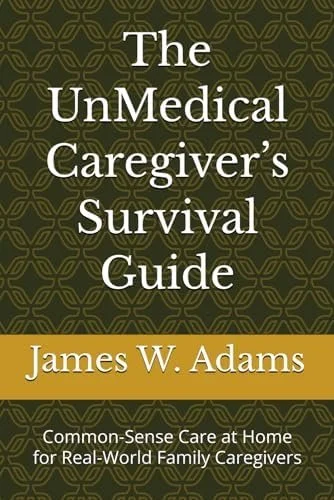
I wrote The UnMedical Caregiver’s Survival Guide as a plain-language, practical resource for untrained caregivers at home. It’s designed to support what you’re already teaching — without overwhelming the reader.
If you’re ever looking for something straightforward to recommend, it may be worth a look:
I hope you, your family, and your person are happy, healthy, loved, and safe. And remember if a clown like me can do it, you’ll be fine (if not better).
Unmedical exists to be the bridge between highly trained medical professionals and everyday family caregivers. Our mission is simple: make caregiving clear, practical, and human so you can care with confidence without burning out.
Disclaimer: I am not writing this from the perspective of a medical professional. The information in this article is for general caregiver support and educational purposes only. It should not be taken as medical advice, diagnosis, or treatment. Always consult a qualified healthcare provider with questions about your loved one’s health or recovery.